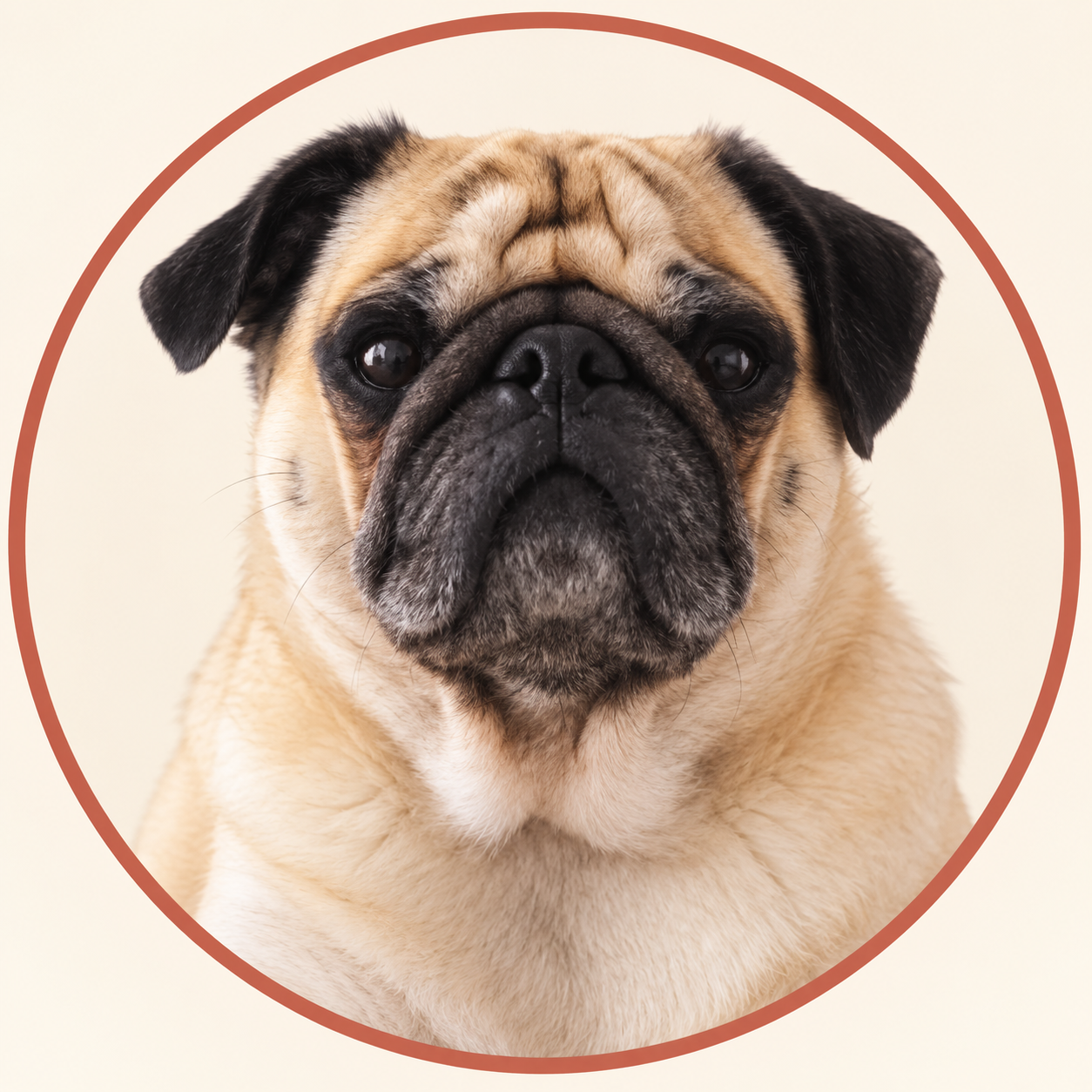
Slow Feeders for Pugs: The Short-Snout Fit Guide
The best feeder for a pug is one your particular dog can use comfortably. A tall maze may look clever and still leave a short muzzle pressing against the rim. Start with fit, access and cleaning. A higher price or longer meal does not prove that a feeder is better.
Our approach: this is a buying and fit guide, not a hands-on ranking. We have not tested these products as a group, measured health outcomes or assigned invented scores. You may already own a suitable shallow bowl.
Choose a format for the problem you actually have
| Format | Potential fit | What to check |
|---|---|---|
| Wide, shallow slow bowl | Dry food with easy nose access | Low ridges, wide channels, stable base, smooth edges |
| Shallow textured feeding mat | Suitable soft food in a thin layer | Food is reachable; the mat is not chewed or swallowed |
| Stuffable food toy | A separate supervised enrichment activity | Appropriate size and accessible opening; begin loosely filled |
| Several small portions in a normal bowl | A no-purchase first experiment | Dog remains relaxed; the total meal stays measured |
The short-snout fit test
- Look at an empty feeder. Feel for sharp edges, damage or detachable pieces. Check manufacturer sizing and cleaning instructions.
- Add a few visible pieces. Put it on a non-slip surface. Stay beside your pug without pushing their face toward the food.
- Watch the whole posture. Your dog should reach food without repeatedly forcing their nose into a narrow slot, rubbing eyes against the rim or wrestling the bowl across the floor.
- Make success easy. Spread food near accessible edges first. A difficult puzzle is not a useful first lesson.
- Inspect afterward. Look for damage, trapped food and any apparent discomfort. Stop using the feeder if you see problems.
What to check before you buy
Measure the usable width and depth, not just the advertised capacity. Compare those measurements with a bowl your pug already uses comfortably. Read the actual cleaning directions: dishwasher-safe may refer to a particular shelf or removable component. Check whether the base stays stable on your floor and whether replacement parts are available. Photos of a different breed do not establish pug fit.
Food-contact materials should be identified by the manufacturer. Avoid mystery coatings, sharp homemade dividers and loose stones placed in a bowl. For a dog who chews silicone or plastic, a feeding mat may be the wrong format regardless of its popularity.
Introduce it without turning dinner into a contest
Keep the same planned meal amount. Offer only a small part in the new feeder and the remainder in the familiar bowl. Increase use only if the dog stays comfortable. Supervise, separate pets around food when needed, and remove food residue after the meal. A simple note about access, frustration and cleaning is more useful than timing alone.
When changing the bowl is not enough
Repeated gagging, coughing during meals, regurgitation, weight loss or difficulty breathing needs veterinary advice. A feeder does not diagnose or treat those problems. Do not deliberately make a meal harder for a dog already struggling to eat. Review measured feeding and treats and discuss persistent symptoms with your vet.
Further reading
KONG's manufacturer guidance describes food-toy use and cleaning; follow the instructions for the specific product you buy. Dogs Trust's enrichment guide covers suitability, supervision and adjusting difficulty. See also our broader pug toy guide.