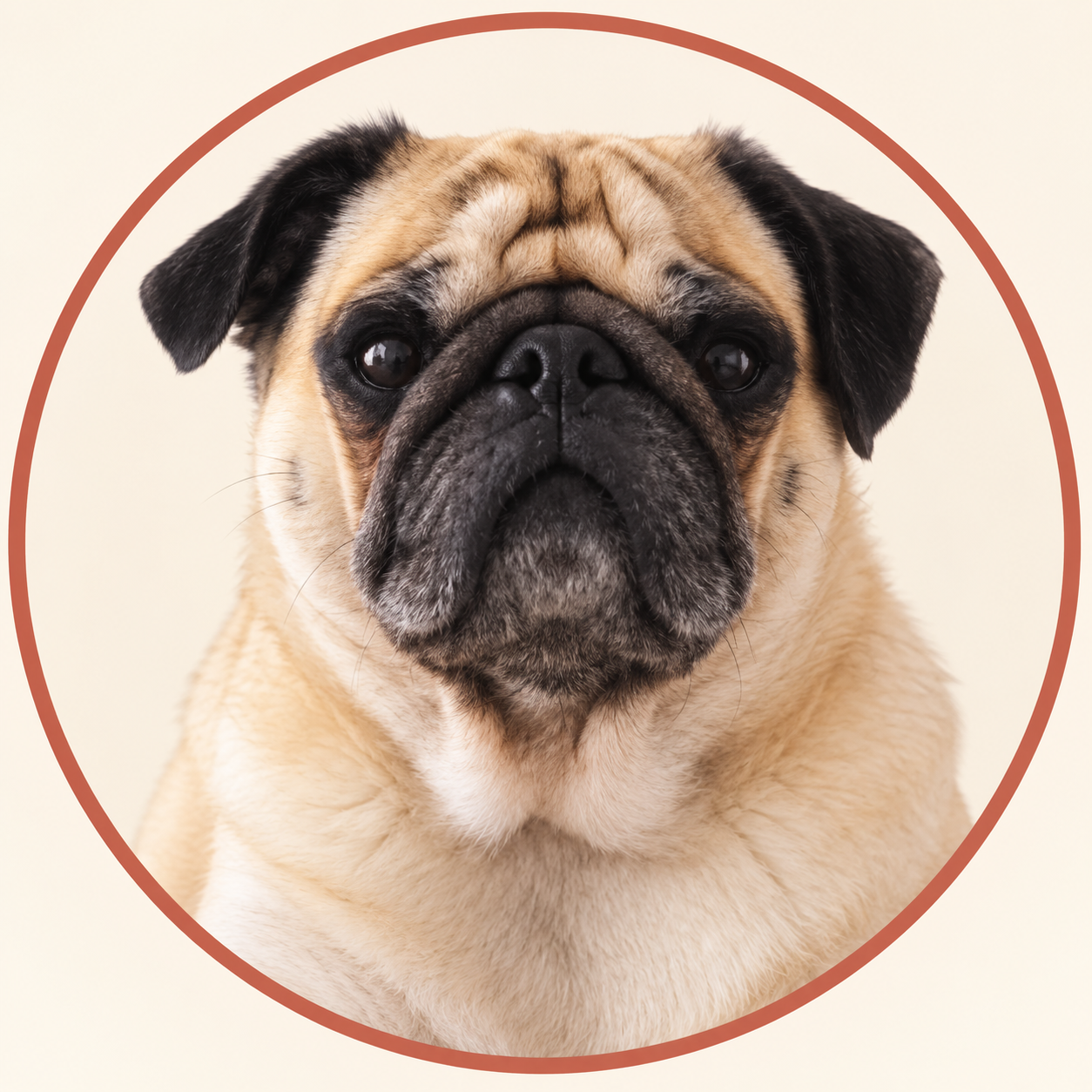
Pug Breathing Problems: What to Notice and When to Get Help
A pug's familiar snort is not a reliable measure of healthy breathing. Listen to your own dog's everyday pattern and take changes seriously. The Royal Veterinary College warns that noisy breathing at rest or during light activity should not be accepted as a harmless breed trait.
Distress comes before any checklist
If your dog is struggling to breathe, collapses, or has blue or very pale gums, contact an emergency veterinarian immediately. Keep handling calm and minimal. Do not force exercise, food or water, put objects into the mouth, or wait for an online explanation. If overheating may be involved, follow the emergency clinic's cooling and transport advice.
What BOAS means
Brachycephalic obstructive airway syndrome, usually shortened to BOAS, describes airway obstruction associated with a short-faced skull and related soft tissues. The location and severity of obstruction differ between dogs. A diagnosis cannot be made from a photograph, breed label or sound recording alone. Veterinary examination determines what is happening and what management or treatment may help.
What to notice on an ordinary day
- Breathing noise while resting, awake or asleep.
- Comfort during the same easy walk your dog usually manages.
- How long it takes to settle after ordinary movement.
- Interrupted sleep, unusual sleeping positions or apparent difficulty finding a comfortable position.
- Coughing, gagging or bringing food back up, especially when it keeps happening.
- Whether warm or humid weather changes tolerance.
These are observations to discuss, not a home grading system. Do not create a demanding walk to test the airway. A short video of a naturally occurring episode may help your vet if recording does not delay care.
Make the veterinary visit more useful
Bring a simple timeline: when you first noticed the issue, what your dog was doing, weather conditions and recovery. Include previous operations, medicines and weight changes. Ask whether BOAS assessment or referral is appropriate, which warning signs need immediate attention, and what a safe activity plan looks like for this individual dog.
The University of Cambridge's BOAS group describes both management and surgical options. Weight management and avoiding overheating can matter, but they do not remove every anatomical obstruction. Surgery, when appropriate, requires an individual discussion of expected benefit, risks and recovery. A website should not choose it for your dog.
Daily management while following your vet's plan
Choose cooler conditions, take breaks and let comfort determine activity. Use a well-fitted harness as advised rather than pulling at the throat. Keep your dog at the body condition recommended by your vet; count training food and chews within the feeding plan. Build calm indoor alternatives for unsuitable outdoor conditions. None of these steps makes worsening breathing safe to ignore.
Snorting episodes need context
Some dogs have episodes described as reverse sneezing. Do not label a new or severe breathing episode from the sound alone. Tell your vet how long it lasted, whether the dog remained responsive and what happened afterward. Repeated episodes or any distress deserve assessment.
Veterinary references
RVC guidance on noisy breathing; Cambridge: recognition and diagnosis; Cambridge: management and treatment. Educational guidance; your veterinarian assesses your dog.