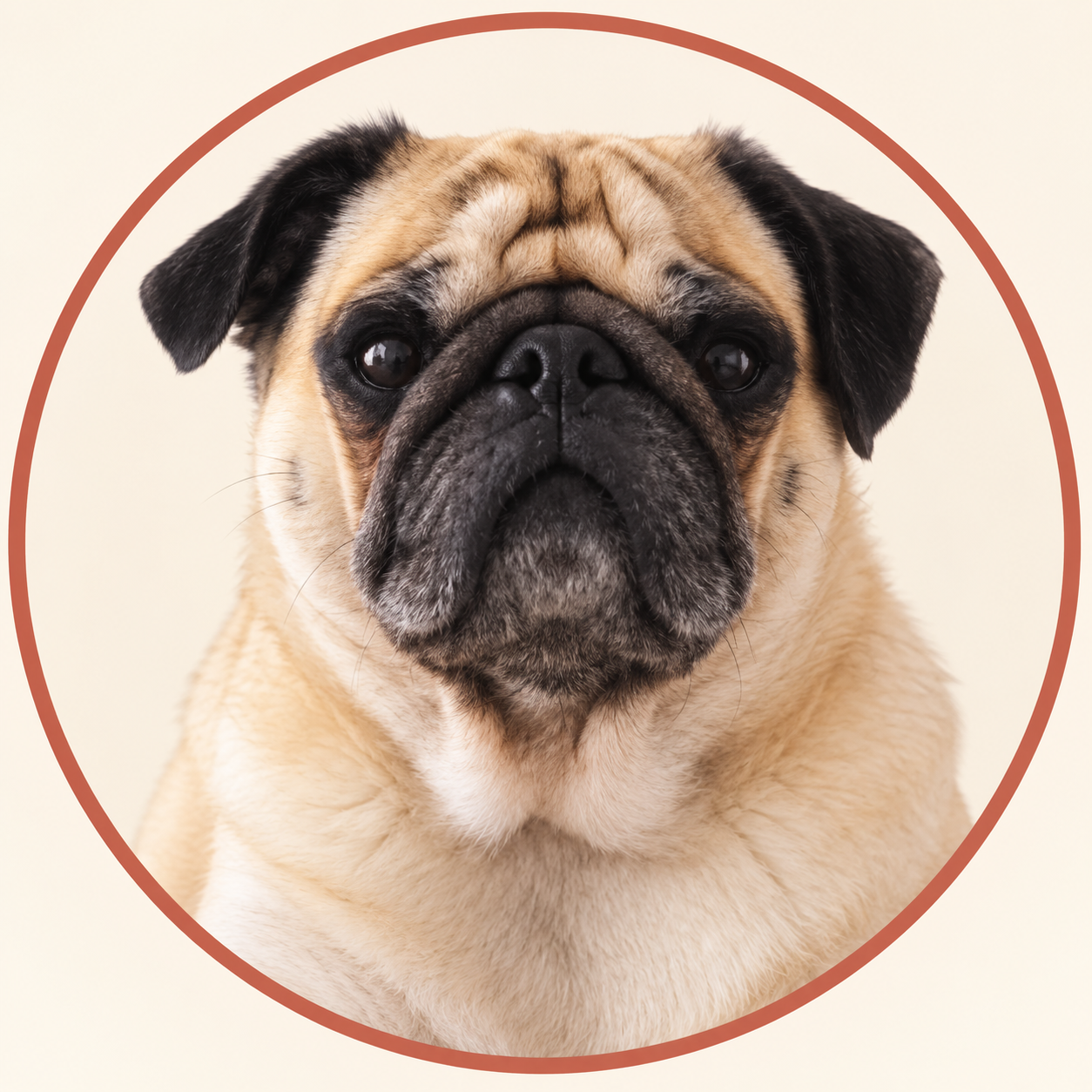
How to Brush a Pug: A Gentle, Practical Routine
A short coat still leaves plenty of hair on the couch. Gentle brushing removes loose hair, gives you a chance to notice skin changes and can become a comfortable routine. It will not stop normal shedding. The American Kennel Club recommends weekly brushing for pugs with a suitable bristle brush, rubber mitt or hound glove.
Choose gentle tools first
Start with a soft rubber grooming mitt or a medium-bristle brush designed for a short coat. Feel the surface on your own hand before touching your dog. A tool should not need heavy pressure to work. Ask a groomer or your vet before using a blade-style shedding tool on thin or irritated skin. The goal is to remove loose hair, not scrape away as much coat as possible.
Have a non-slip mat and a towel ready. Choose a cool spot with enough light to see the skin. If your pug dislikes the brush, put it nearby and reward calm interest before you attempt a stroke. Work at floor level if a grooming table would introduce unnecessary risk.
A manageable brushing session
- Look and feel first. Check for sore spots, scabs, damp patches, parasites or areas your dog does not want touched. Avoid brushing over a lesion and seek veterinary advice for an unexplained change.
- Begin with a comfortable area. One or two light strokes along the shoulder or back may be enough for the first session.
- Follow the coat. Use short, gentle strokes in the direction the hair naturally lies. Lift loose hair from the tool frequently.
- Work in sections. Back, sides and chest can be separate small tasks. Support your dog's position rather than twisting a leg or holding the head in place.
- Leave delicate areas alone. Keep the brush away from eyes, irritated folds, genitals and sore skin. Face-fold care needs its own gentle routine.
- End before your dog struggles. Reward cooperation and put the tool away. More tomorrow is better than forcing a long session today.
When shedding changes
Seasonal changes can increase loose hair, but bald patches, marked itching, redness or a new odor are not just a reason to buy a stronger brush. Note where the change occurs and when it began. Read the skin-problem guide and contact your veterinarian. Grooming cannot identify every cause of hair loss.
Brushing and bathing are separate decisions
Loose hair can be removed before an appropriate bath, but a dog does not need shampoo after every brushing session. Use dog-specific products and follow their directions when bathing is needed. Rinse thoroughly and keep your pug comfortable while drying; avoid hot air. Ask your vet about products when skin disease is present.
A routine that lasts
Keep the mitt where you can reach it, clean it after use and write down any sore area you noticed. Pair a short coat check with the face-fold routine, a look at the ears and a quick check of the paws. Those checks need not all become cleaning jobs. Your pug's willingness to return for the next session is a useful measure of how the routine is going.
References
AKC pug breed care; ASPCA grooming and shedding guidance. The session sequence above is an example routine, not a substitute for treatment of painful skin.